Livin' La Vida Luna y Luca

These guys are so funny. They need to cuddle during Toy Story 5 in case there are any scary parts. Not mad about it at all. 🥰
Built to Sell. Listed for Rent.
There are two common ways real estate professionals measure the strength of a market.
The first is Days on Market (DOM), which is the average or median number of days a property is actively listed for sale on the multiple listing service (MLS) before it accepts an offer and goes under contract.
The second is Absorption Rate, which is calculated by taking homes sold in a period divided by active listings. A high absorption rate means inventory is clearing quickly.
As developers, we obviously want to stick to towns with low days on market and high absorption rates.
And you might be able to stop there if you're developing an entry-level product, but your filter needs to be much stronger when developing luxury homes selling for $2M+.
A few detractors we like to avoid:
- Double-yellow roads
- Power lines
- Train tracks
- Gas stations / Commercial
- Graveyards
- Corner lots with small backyards
Obviously, we make exceptions if there's a good reason. For example, Project Fairmount was on a double-yellow, but it was also walking distance to the train station.
Why Am I Bringing This Up Now?
I recently noticed two luxury spec homes get delisted for sale and relisted for rent.
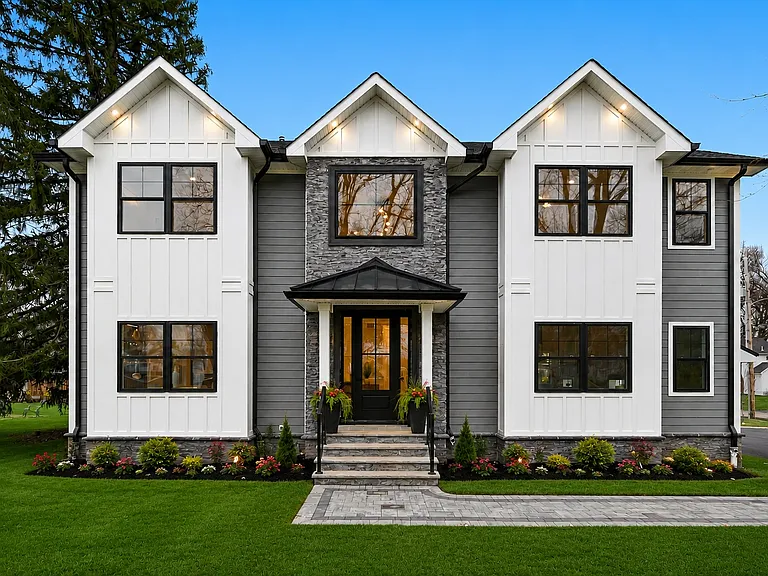
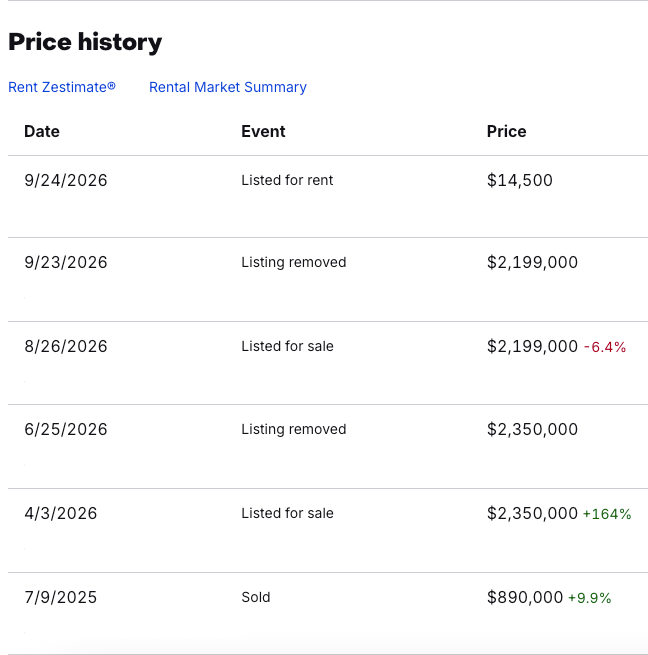
Home 1
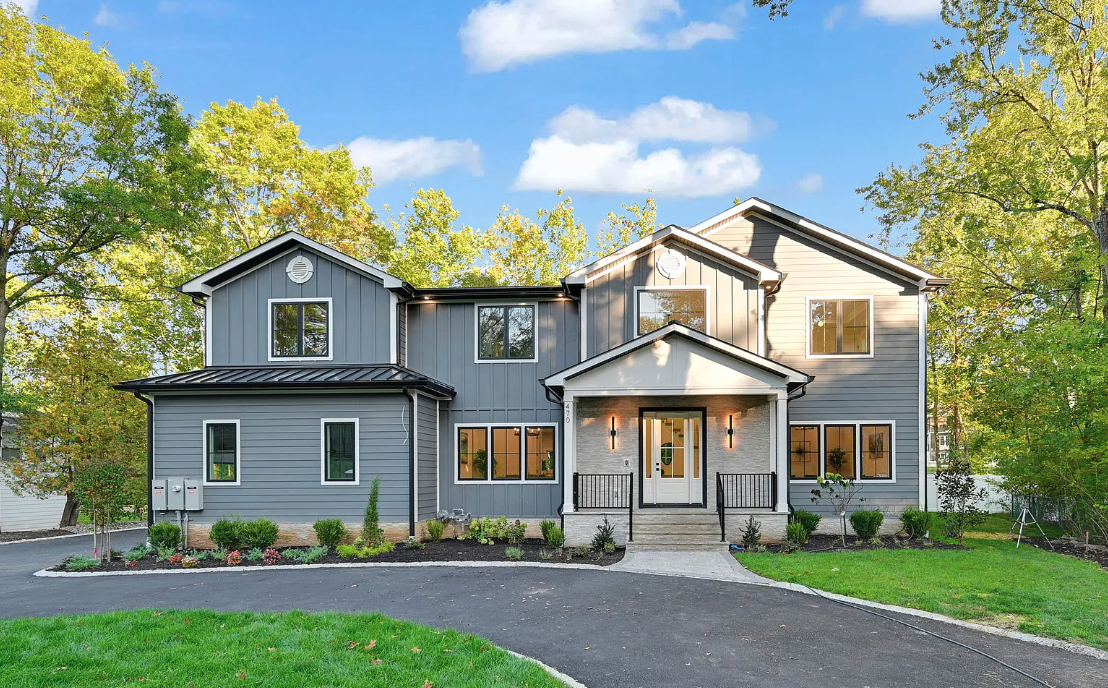
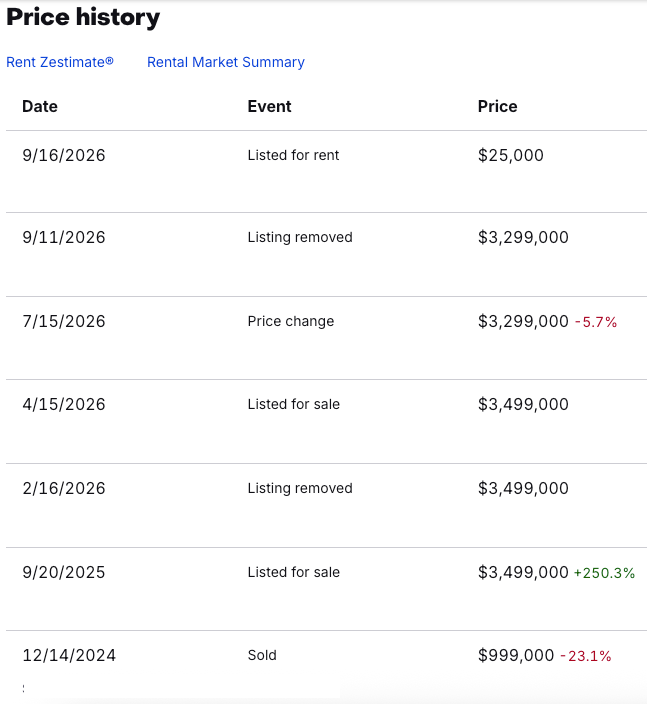
Home 2
Normally, I wouldn't give this too much thought. I'd feel bad for the developer and get on with my life.
The reason this has been living in my head rent-free for the past 2 weeks is because I think I would have taken these projects on at the same acquisition cost if I had the chance.
The developer bought Home 1 for $890,000. I recently bought a house not too far from it for $885,000, and I'm ~ready to buy another house nearby for $950,000.
Home 2 was acquired for $999,999. I bought Project Silver Spring for $1.375M, which is not too far from this home and on a similarly sized lot.
Of course, I could make the argument that my partner and I would build a better home, or that we'd have a better sales process, but that feels way too reductive and egotistical.
I've been meaning to run the numbers on converting these homes to rentals, but couldn't find the time until I sat down to write this newsletter. So let's go through it together.
Rental Conversion Numbers
Assuming both homes appraise for their latest asking price (generous), the borrower would be able to get a new loan for 70% of that value:
- Home 1: $2.2M * 70% = $1.54M
- Home 2: $3.2M * 70% = $2.24M
Let's assume both loans would be ~7.5% IO for 10 years.
- Home 1: $1.54M * 7.5% / 12 = $9,625/mo
- Home 2: $2.24M * 7.5% / 12 = $14,000/mo
Insurance would be roughly $200/mo for Home 1 and $400/mo for Home 2.
Property Tax is roughly $2,000/mo for Home 1 and $4,000/mo for Home 2.
Monthly Fixed Costs:
- Home 1: $11,825
- Home 2: $18,400
Monthly Variable Costs:
- Vacancy: 8%
- Repairs, Maintenance, CapEx - 2% (New)
- Leasing / Management: 8%
Total Cost:
- Home 1: $14,435 against a Rent of $14,500
- Home 2: $22,900 against a Rent of $25,000
From a P&L perspective, they're charging just about what they need to break even.
Now Let's Do the Loan-To-Cost
I'm going to assume these homes were developed to obtain 15% net margin on the original asking price.
- Home 1: $2.35M * 85% = $2M basis (including selling costs)
- Home 2: $3.5M * 85% = $3M basis (including selling costs)
If we back out the cost of sale for each based on their latest asking price (because they didn't sell), we have:
- Home 1: $2M - (7% of 2.15M) = $1.85M basis
- Home 2: $3M - (8% of 3.3M) = $2.75M basis
Both refinance loan amounts are less than the developer's basis, which means they're either bringing significant capital to the closing table or leaving a ton of their money in the properties:
- Home 1: 1.85M Basis against Loan of 1.54M = 310K
- Home 2: 2.75M Basis against Loan of 2.24M = 510K
$820K sitting dormant with virtually no cashflow. Holy shit.
These homes obviously weren't built as rentals so it not fair to expect a soft landing. Part of me wonders why they didn't reduce the price further to just rip the band-aid off and get out?
I've done my fair share of converting failed flips into rentals and I can confidently say I prefer taking a small loss over kicking the can down the road. The market can stay irrational far longer than any one individual can stay liquid.
I'm sad for the developer, but I'm happy I went through this exercise. Apologies if it was hard to follow. The lesson for me is being even pickier about which projects we take on. We should be fine as long as we don't venture too far out of our sandbox.
Til next time... ✌🏽&❤️